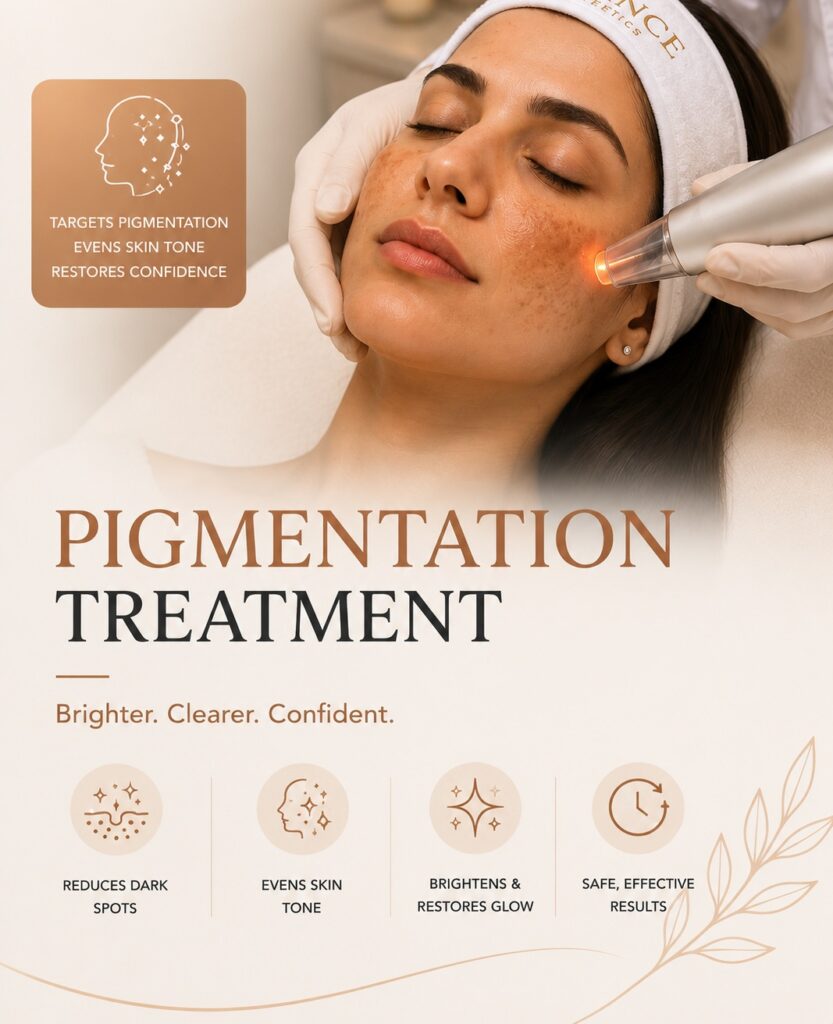
Facial Pigmentation Treatment in Thrissur
Dark patches and uneven skin tone can have different causes. At Nuance Aesthetics, treatment begins with identifying the pigmentation pattern—not choosing a procedure at random.
“Facial pigmentation” is not one condition
Hyperpigmentation occurs when an area of skin develops more colour than the surrounding skin. It may appear after acne or inflammation, develop gradually with sun exposure, or occur in a distinct pattern such as melasma.
Because treatment depends on the cause and depth of pigment, using strong creams or procedures without assessment can irritate the skin and make pigmentation more noticeable.
A dermatologist-led plan combines an appropriate skincare routine, consistent photoprotection and selected clinic procedures when indicated.
What may be causing the dark patches?
An examination is needed for diagnosis. Common patterns include the following.
Post-acne marks
Flat dark marks can remain after pimples heal. Preventing new acne is an important part of the plan. See our acne treatment page.
Melasma
Often appears as symmetrical brown patches on the cheeks, forehead or upper lip. Read about melasma treatment.
Sun spots & freckles
Small, defined areas of pigmentation may become more visible with cumulative sun exposure.
Post-inflammatory pigmentation
Darkening may follow irritation, allergy, injury, eczema or an unsuitable cosmetic product.
Perioral pigmentation
Pigmentation around the mouth can have multiple contributing factors and should be evaluated before treatment.
Other pigment conditions
Some patches need further evaluation or a different medical pathway rather than a cosmetic procedure.
Why facial pigmentation may persist throughout the year
Thrissur’s year-round daylight, outdoor exposure, heat and humidity can make pigment control challenging. Heat and repeated skin irritation may also aggravate certain pigmentation patterns.
For suitable patients, a tinted broad-spectrum sunscreen containing iron oxides may improve protection against visible light. Your dermatologist can help choose a formula that suits your skin type and daily routine.
Hats, shade, gentle skincare and regular sunscreen application remain important alongside clinic treatments. Procedures alone cannot compensate for continued pigment triggers.
Options may include
What to expect at Nuance
Detailed history
We discuss onset, triggers, products, medicines and previous treatments.
Skin assessment
The pattern, distribution, depth and associated skin concerns are assessed.
Personalised plan
You receive suitable home care, precautions and procedural options if needed.
Review & refine
Progress is monitored and treatment is adjusted according to response.
Facial pigmentation FAQs
There is no single best treatment for every dark patch. The correct option depends on the cause, pigment depth, skin type and risk of irritation. Diagnosis should come before product or procedure selection.
Some spots may respond well, while conditions such as melasma can recur. Sun protection, trigger control and maintenance care often remain important after improvement.
Selected superficial peels may help certain epidermal pigmentation patterns. They are not suitable for everyone and should be chosen according to the diagnosis and skin type.
No. Laser choice depends on the pigment condition and skin response. Inappropriate or aggressive treatment can cause irritation or post-inflammatory pigmentation, especially in darker skin tones.
Ultraviolet and visible light can darken several pigment conditions. Consistent broad-spectrum protection supports treatment and helps reduce further darkening.
Tanning is usually a more uniform darkening after ultraviolet exposure and may fade gradually. Melasma typically forms irregular, often symmetrical patches on areas such as the cheeks, forehead or upper lip and commonly needs long-term management.
Yes. UVA and visible light are present even on cloudy days, so pigment-prone skin can still darken. Continue the photoprotection routine recommended by your dermatologist throughout the year.
Heat may aggravate certain conditions, including melasma, in some people. Avoiding prolonged heat exposure and maintaining gentle skincare may form part of an individual plan.
It is a laser-based option sometimes used for selected pigment concerns. Conservative settings and careful patient selection are important in darker skin because overly aggressive treatment may trigger rebound or post-inflammatory pigmentation.
Nuance Aesthetics is at Palliyil Building, opposite Pinnacle Residence, Panchikkal, Ayyanthole, Thrissur. All consultations are by prior booking.
Let’s identify the cause of your pigmentation
Book a dermatologist consultation at Nuance Aesthetics, Ayyanthole, Thrissur. Open all days, 10:00 AM–6:30 PM, with prior booking.