Evidence-based acne treatment, personalised to your skin
Acne is a medical condition—not a hygiene failure. At Nuance Aesthetics, we assess the type, severity, marks, scarring and possible triggers before building a practical treatment and maintenance plan.
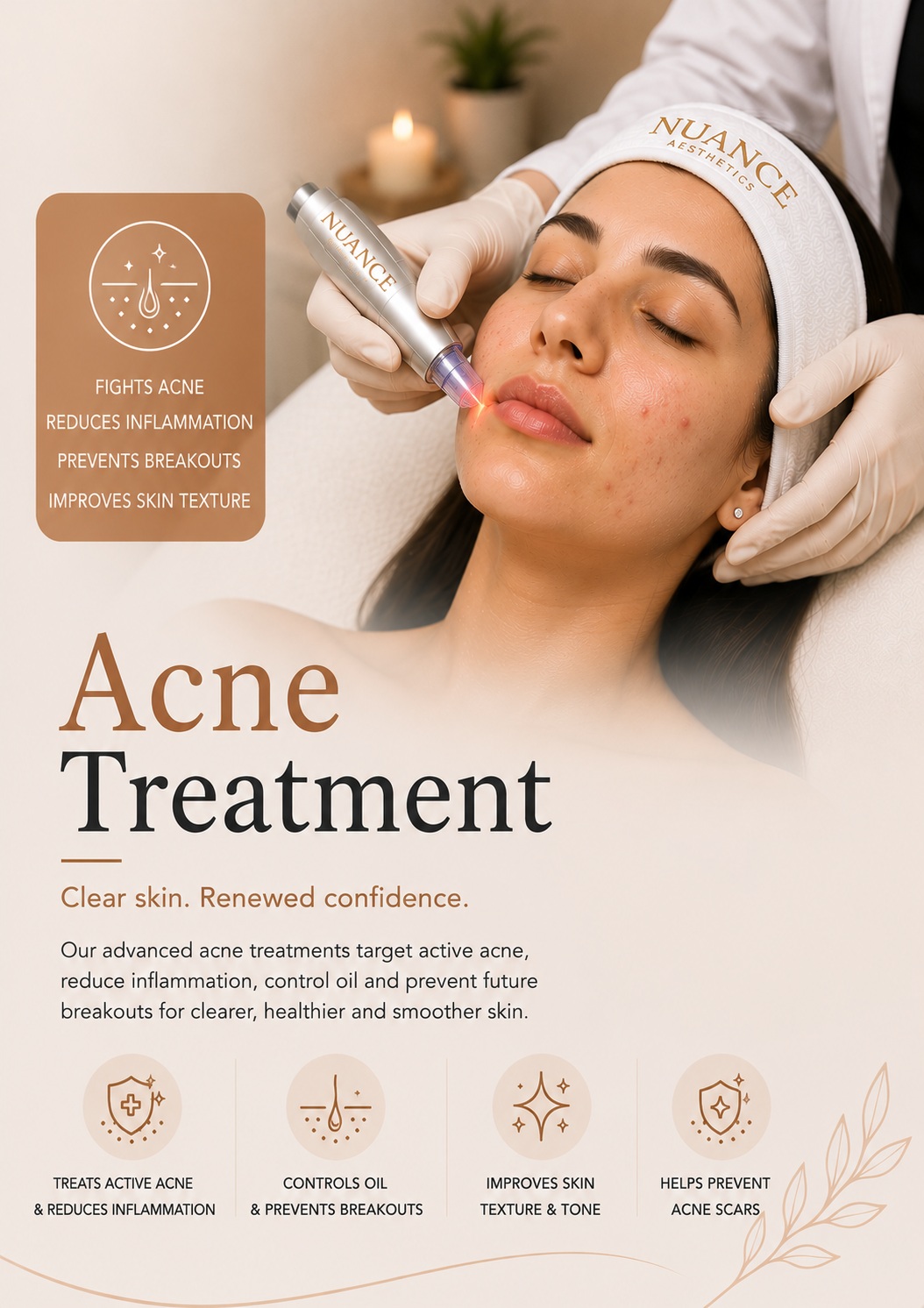
More than “just pimples”
Acne vulgaris affects the pilosebaceous unit—the hair follicle and its oil gland. Several processes usually overlap, which is why one product rarely suits everyone.
What may be present
Open comedones (blackheads), closed comedones (whiteheads), inflamed papules, pustules, deep nodules or cysts. After lesions settle, some people develop red or brown marks; others develop raised or depressed scars.
Marks are not the same as scars. Post-inflammatory colour change may fade, while true textural scars often need separate procedures after active acne is controlled.
What your dermatologist considers
The diagnosis is usually clinical. Tests are not routinely required, but may be considered when the history suggests an underlying hormonal or medical factor.
Pattern and severity
Comedonal, inflammatory or nodulocystic acne; face, chest or back involvement; pain, marks and scarring.
History and triggers
Onset, flare pattern, menstrual history where relevant, medicines, supplements, occupation, friction and family history.
Previous treatment
What was used, for how long, response, irritation, adherence and whether antibiotics were used alone or repeatedly.
Product audit
Cleansers, moisturisers, sunscreens, hair products, make-up and steroid-containing or fairness creams.
Safety factors
Pregnancy plans, breastfeeding, allergies, other conditions and medicines can materially change treatment selection.
Personal priorities
Active breakouts, pigmentation, discomfort, scarring and psychosocial impact are discussed to set realistic goals.
Treatment is matched to acne type and severity
Combination therapy is often more effective because different treatments act on different acne pathways. Your prescription, sequence and monitoring must be individualised.
| Option | Where it may fit | Important context |
|---|---|---|
| Topical retinoids | Comedonal and inflammatory acne; maintenance in suitable patients. | Help prevent blocked follicles. Irritation can occur, so introduction is usually gradual. Pregnancy status matters. |
| Benzoyl peroxide | Inflammatory acne, often as part of a combination. | Reduces acne-associated bacteria without driving antibiotic resistance; may irritate skin and bleach fabric. |
| Azelaic or salicylic acid | Selected patients with acne, clogged pores or post-acne pigmentation. | Choice and strength depend on skin sensitivity and the wider plan. |
| Topical/oral antibiotics | Selected inflammatory acne for a limited course. | Antibiotic monotherapy is avoided. Guidelines advise combining antibiotics with benzoyl peroxide and limiting duration where possible. |
| Hormonal treatment | Appropriate female patients with a hormonal pattern or related features. | Requires medical assessment of suitability, contraindications and pregnancy plans. |
| Oral isotretinoin | Severe, scarring, treatment-resistant acne or substantial psychosocial burden. | Prescription-only treatment requiring dermatologist supervision, counselling, pregnancy prevention where applicable and appropriate monitoring. |
| Procedural adjuncts | Selected comedones, active lesions or post-acne concerns. | May include professional extraction or carefully chosen chemical peels. These complement—not replace—appropriate medical treatment. |
Improvement is gradual—and maintenance matters
Acne care is a process rather than a one-day procedure. Early dryness or irritation may need adjustment; visible improvement commonly takes several weeks, and preventing relapse can require maintenance.
Timelines vary. Some treatments need earlier or more frequent review. Never start, stop or change prescription medicines based only on website information.
Watch our short acne guides
Quick explanations from Nuance to help you understand common acne concerns before your consultation.
Acne treatment FAQs
Clear answers, without promising instant or identical results.
How soon will I see improvement?
Acne treatment usually needs consistent use for several weeks before meaningful improvement is visible. A common review window is around 6–12 weeks, but severe acne, side effects or certain medicines may require earlier follow-up.
Can acne get worse before it gets better?
Some people experience irritation or a temporary change after starting treatment, but significant worsening should not simply be ignored. Contact your dermatologist so the diagnosis, application method and plan can be reviewed.
Do foods cause acne?
Acne is not caused by one food in everyone. Evidence suggests high-glycaemic dietary patterns may worsen acne in some people, and dairy may be relevant for some, but restrictive diets are not a substitute for medical care. We focus on sustainable changes when the history supports them.
Can I use antibiotics alone?
Current guidance discourages antibiotic monotherapy because of resistance. When an antibiotic is appropriate, it is generally combined with benzoyl peroxide and used for the shortest effective period under medical supervision.
Is isotretinoin safe?
Isotretinoin can be highly effective for appropriately selected severe, scarring or resistant acne. It also has important risks and strict pregnancy precautions, so it must be prescribed and monitored by a qualified doctor after individual counselling.
Can acne treatment be used during pregnancy?
Some common acne medicines, especially retinoids, are unsuitable during pregnancy. Tell your dermatologist if you are pregnant, breastfeeding or planning pregnancy before using any medicine or procedure.
Should acne scars be treated immediately?
Controlling active acne is usually the first priority because ongoing breakouts can create new scars. Scar planning depends on acne stability, scar type, skin type and downtime preferences.
When should I see a dermatologist promptly?
Seek assessment for painful nodules or cysts, rapid scarring, significant distress, suspected medicine-related acne, possible hormonal symptoms, or acne that has not improved with an appropriate course of treatment.
Where is Nuance Aesthetics?
Palliyil Building, opposite Pinnacle Residence, Panchikkal, Ayyanthole, Thrissur. We are open all days, 10:00 AM–6:30 PM. Consultations are by prior booking.
Clinical sources
Page content is informed by major evidence-based acne guidance and patient information. These references support general principles; they do not replace individual clinical judgement.
Get a plan built around your acne—not someone else’s routine
Nuance Aesthetics, Ayyanthole · All days, 10:00 AM–6:30 PM · Prior booking
Medical disclaimer: This page provides general educational information and is not a diagnosis or prescription. Treatment suitability, side effects, monitoring and results vary. Consult a qualified dermatologist for personalised advice.